

Dr. M. Joycelyn Elders
Dr. M. Joycelyn Elders stands as a remarkable figure in American history, breaking barriers and inspiring generations with her resilience and dedication to public health. Born in 1933 in rural Arkansas to a family of sharecroppers, Elders faced the harsh realities of segregation and economic hardship. Yet, she demonstrated exceptional academic prowess, graduating as valedictorian from Howard County Training School at the tender age of 15 and attending college on a scholarship.
Elders’ journey towards becoming a trailblazing physician began with modest aspirations of becoming a lab technician. However, a transformative encounter with Dr. Edith Irby Jones, the first African American student at the University of Arkansas Medical School, ignited within her a burning ambition to become a doctor. Despite financial constraints and the arduous labor of working in the fields alongside her seven siblings, they made ends meet so that she could attend Philander Smith College.
Her determination to excel propelled her to finish college in just three years, and at the age of 19, she enlisted in the Army, serving as a physical therapist. During her time in the military, Elders contributed to the rehabilitation of former President Eisenhower after his heart attack, showcasing her commitment to service and healthcare.
Undeterred by the pervasive racism and sexism she encountered, Elders pursued her medical education at the University of Arkansas Medical School. She persevered through the challenges, graduating in 1960 as the only woman in her class. Following her medical training, Elders completed a pediatric internship at the University of Minnesota before returning to Arkansas for her residency.
As she climbed the ranks in her medical career, Elders faced myriad obstacles but continued to shatter glass ceilings. She became the chief pediatric resident at the University of Arkansas and later earned a master’s degree in biochemistry, eventually becoming a full professor.
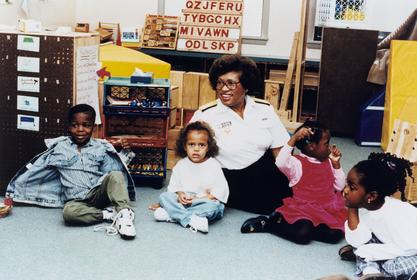
Surgeon General Joycelyn Elders at a daycare center, 1994 (courtesy of Parklawn Health Library)
Throughout her career, Elders championed the health and well-being of children, advocating for comprehensive sex education and adolescent health. When appointed as the head of the Arkansas Department of Health, she implemented groundbreaking initiatives to address teen pregnancy, expand immunization programs, and improve prenatal care.
Elders’ unwavering commitment to public health caught the attention of President Bill Clinton, who nominated her for the prestigious position of Surgeon General in 1993. Despite facing vehement opposition and discriminatory scrutiny during her Senate confirmation hearings, Elders assumed the role with determination and vision.
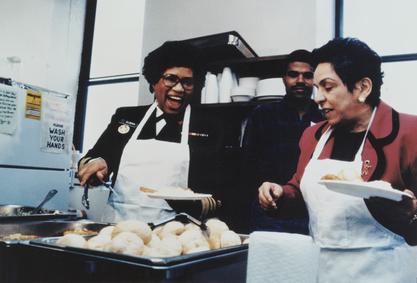
Surgeon General Joycelyn Elders and Secretary of the Department of Health and Human Services, Donna Shalala at a soup kitchen, 1994 (courtesy of Parklawn Health Library)
During her tenure as Surgeon General, Elders sought to tackle pressing public health issues, including HIV/AIDS and substance abuse, with bold and progressive strategies. However, her outspoken advocacy for controversial topics such as sex education and drug legalization garnered intense criticism from conservative factions and the media.
Amid mounting pressure and controversy, President Clinton reluctantly requested Elders’ resignation in 1994, marking the end of her tenure as Surgeon General. Despite this setback, Elders remained undeterred in her mission to advance public health and equity. She continued her work at the University of Arkansas and Arkansas Children’s Hospital, dedicating herself to educating future generations of healthcare professionals and advocating for marginalized communities.
Today, Dr. Joycelyn Elders serves as a beacon of hope and inspiration, exemplifying the power of perseverance, resilience, and unwavering commitment to the greater good. Her legacy continues to resonate, urging us to confront systemic injustices and strive for a more equitable and inclusive society.
Sources:
https://cfmedicine.nlm.nih.gov/physicians/biography_98.html