

March is Women’s History Month, a time to celebrate the bold women who fought for justice, equity, and access to essential healthcare. Among them is Ophelia Settle Egypt (1903–1984)—a social worker, historian, and advocate who dedicated her life to ensuring that reproductive health care was accessible to those who needed it most.
Born in a small town near Clarksville, Texas, Egypt pursued higher education at a time when few Black women had such opportunities. She earned a BA from Howard University in 1925 and a MA in sociology from the University of Pennsylvania in 1928. Later, she was awarded an MS from the New York School of Social Work in 1944 and worked toward a Ph.D. at the Pennsylvania School of Social Work. She was not only an academic but a researcher and activist, helping to expose the Tuskegee syphilis study, which deliberately withheld treatment from Black sharecroppers in Alabama. She also played a key role in Charles Johnson’s “Shadow of the Plantation” study, which shed light on the exploitation of sharecroppers in the segregated South.
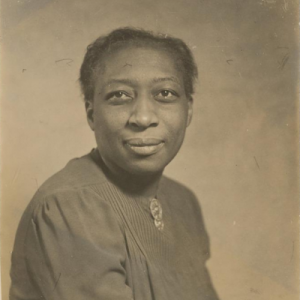
Photo courtesy of National Women’s History Museum.
As the Great Depression deepened, Egypt shifted her focus from research to hands-on social work, assisting with relief efforts in St. Louis and later serving as head of social services at a hospital in New Orleans. She continued breaking barriers in academia, earning a scholarship from the National Association for the Prevention of Blindness to study medicine and sociology at Washington University. However, as a Black woman, she was denied classroom learning and had to receive all her lessons from a tutor. Despite these obstacles, she persevered, later conducting research for James Weldon Johnson, about whom she wrote a children’s book.
By the 1950s, Egypt had settled in Southeast Washington, D.C., where she turned her attention to the urgent need for reproductive healthcare and family planning in her community. She met young, low-income women who felt they had no options when it came to birth control or reproductive care. Refusing to accept this reality, Egypt took action. She went door-to-door, held neighborhood meetings, and engaged community leaders to break the stigma around contraception. She believed that family planning was more than healthcare—it was about autonomy, stability, and opportunity.
Through her advocacy, Egypt helped establish the first private family planning clinic in Southeast Washington, D.C., in 1957, where she served as director for eleven years. Her work made reproductive healthcare accessible to women who had previously been excluded from it. In 1981, the clinic was renamed in her honor, recognizing her lifelong commitment to equity, health, and social justice.
Ophelia Settle Egypt’s legacy is a powerful reminder that reproductive healthcare is a fundamental right—one that too many still struggle to access today. This Women’s History Month, we honor her contributions and reaffirm our commitment to ensuring that everyone, regardless of income, insurance, or background, has the ability to make informed choices about their health and future.
Sources:
https://www.womenshistory.org/education-resources/biographies/ophelia-settle-egypt
https://socialwelfare.library.vcu.edu/eras/great-depression/egypt-ophelia-settle-1903-1984/